

Written by Tomás Mersán Riera, Partner
✉️ tomasmersan@mersanlaw.com
A successful model—and a successful regulatory framework—
What comes to mind when we hear the name “Warren Buffett”?
Capitalism, investment, money… these are some of the ideas—that come to mind spontaneously—when we hear this name so closely associated with American success. But who is Warren Buffett really, and why is he so well-known around the world?
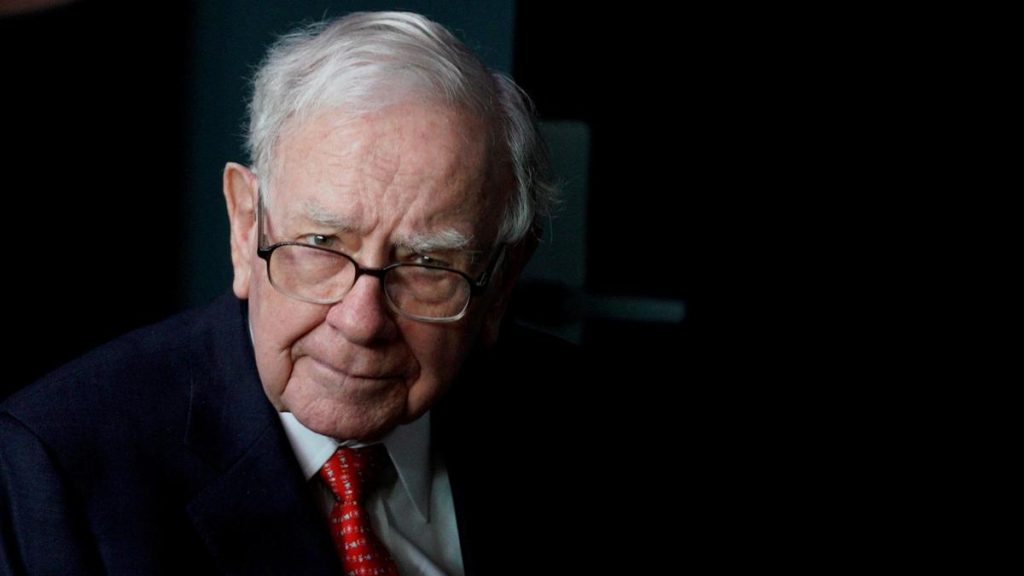
Warren Buffett is a famous American investor and businessman. In addition to being one of the richest people in the world—a fact that undoubtedly attracts the attention of the press and the paparazzi, with an estimated fortune of US$. 87 trillion, the American tycoon is also known for his successful stock market investment strategies and his enviable ability to identify the intrinsic value of companies. He made a large part of his fortune as a stock market investor.
In addition, Buffett is also known for being the majority shareholder (and chairman) of Berkshire Hathaway Inc., one of the most valuable companies in the U.S. and the world. This company operates in the insurance and investment industries. And indeed, a key factor plays a central role in much of the accumulated wealth of both Buffett and Berkshire Hathaway: the legal structure adopted by the company—that of a corporation. holding.
So, with all that in mind, what is a society? holding?
In simple terms, a company holding (“holding company,” “owner,” or “manager,” in Spanish) is a corporation whose primary function is to control or own (usually both) other corporations or companies. This model is one of the modern structures used by commercial entities to conduct their business operations; in particular, it is the model used by multinational corporations to expand their operations into different countries. For example: Banco Itaú Paraguay belongs to the group holding Itaú Unibanco Holding S.A., a corporate group that also controls other companies at the regional level.
The Structure holding It has proven to be one of the most efficient structures for large companies that operate under this model—among other factors—primarily because of the tax benefits it offers. As we mentioned earlier, much of Warren Buffett and Berkshire Hathaway’s success stems from the legal structure they use.
Societies holding, well, both In the U.S. as well as in other jurisdictions, they enjoy the tax benefit of not paying taxes (tax-free) when affiliated companies (the operating companies) distribute dividends to them. This is because the regulations recognize that, strictly speaking, there is no distribution of dividends in this case, but rather a transfer of funds from one group company to another. Taxes on dividend distributions are only paid when the dividends are distributed to shareholders or ultimate beneficiaries.
Warren Buffett in Paraguay
If Warren Buffett were to consider expanding his empire to Paraguay, the first thing he would do is find out about the local tax system. And he would discover the following: The new Law 6380/19 “On the Modernization and Simplification of the National Tax System” provides for the creation of the Dividend Distribution Tax (IDU), which is triggered when companies distribute profits to their shareholders, with an 8% withholding tax applied to the distributed profits. It is worth noting that, for non-residents, the withholding rate is 15%.
However, Article 41 of the new law also provides that if the shareholder is a legal entity (which is the case for corporations holding), the amount of tax paid constitutes a credit to be used when the company distributes profits to its shareholders.
Let's look at this in practical terms.
Let's suppose that Warren Buffett has a company holding Berkshire Hathaway Paraguay, whose shareholders are Warren Buffett and Bill Gates. In turn, further down in the corporate structure, the holding It is a shareholder and owner of the companies Paraguay A and Paraguay B.
When companies Paraguay A and Paraguay B distribute profits to their shareholder, Berkshire Hathaway Paraguay (the parent company), this constitutes a taxable event for IDU purposes. Similarly, when Berkshire Hathaway Paraguay distributes profits to its shareholders (Buffett and Gates), this again constitutes a taxable event.
To avoid this double taxation, the law has included the aforementioned Article 41, which operates as follows. When companies Paraguay A and Paraguay B distribute profits, they withhold 8% as IDU. This 8% is then used as a credit when Berkshire Hathaway Paraguay actually distributes profits to its shareholders, resulting in the following:
- Profit received by the holding = US$. 1,000. Paraguay A retains 8% = US$. 80.
- Society holding It distributes US$. 1,000 to its shareholders, Buffett and Gates. Since the shareholders do not reside in the country, the withholding tax rate is 15%. Therefore, the total tax to be withheld = US$. 150.
- However, since the US$. 80 mentioned in the first point is a credit to be offset, the withholding from shareholders Buffett and Gates will be only for the difference, US$. 70.
Under these circumstances, the main advantage of this regulation is that it prevents double taxation on the same income (profits). The other advantage for corporations holding is that they allow for the reinvestment of profits received without a heavy tax burden. In turn, for corporations whose shareholders are domiciled in the country, this is a way to encourage the capitalization of the corporation holding so that its shareholders can diversify their investments.
This tax provision included in the new law strengthens the competitiveness of our tax system, as it offers benefits to the structure holding, making the environment for foreign investment more attractive. In short, this legislation provides a legal framework with significant tax incentives, which, in turn, represents a step forward in attracting investors of Warren Buffett’s stature to our country.
 Español
  English
  Português do Brasil