

Written by Tomás Mersán Riera, Partner
✉️ tomasmersan@mersanlaw.com
Legend has it that Prometheus stole fire from the gods to give it to humans. Furious, Zeus—intending to take revenge on Prometheus—introduced his brother, Epimetheus, to a beautiful woman named Pandora, whom he later married.
Zeus gave Pandora an enigmatic jar (now commonly known as “Pandora’s box”) as a wedding gift, with explicit instructions not to open it under any circumstances. Despite these instructions, Pandora, who was boldly curious, opened the jar to see what was inside. All the evils of the world escaped from the jar. In the end, only hope remained.
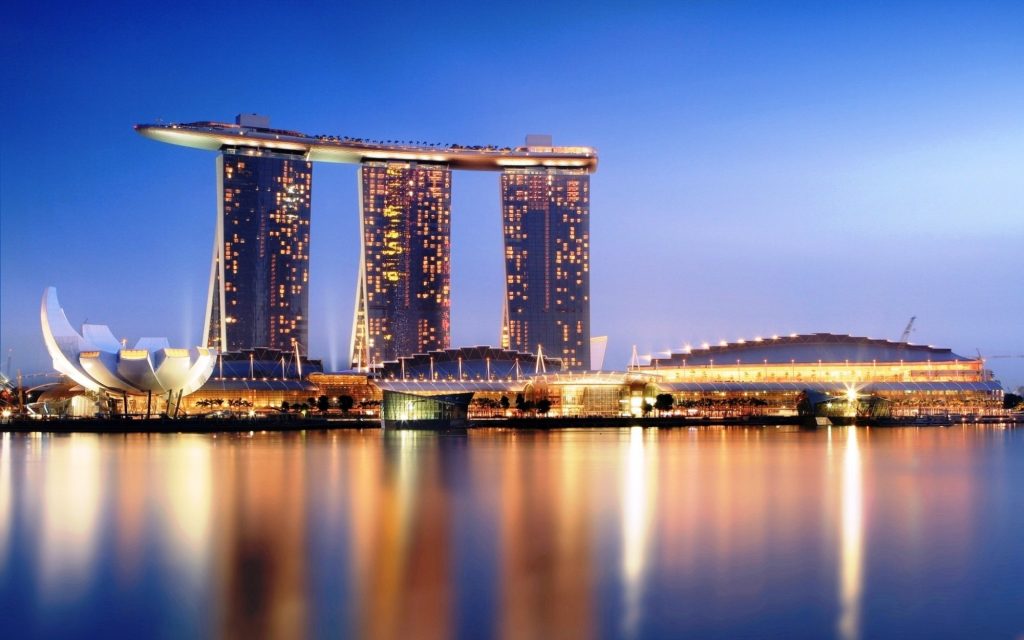
The various evils that escaped from Pandora’s box took a heavy toll on many corners of the world, including a certain Asian country called Singapore. Around the 1960s, Singapore was plagued by one of the highest crime rates in the world. Corruption, drug trafficking, impunity, insecurity, and violence set the bleak course for this nation.
However, following its independence from the Federation of Malaysia in 1965, Singapore’s history took a radical turn. Prime Minister Lee Kuan Yew, aware of the country’s alarming problems, took serious, drastic, and decisive measures to reform and clean up the institutions; he also established a government policy aimed at economic growth. These development policies were later implemented—in some cases with even greater vigor—by his eldest son, Lee Hsien Loong, who assumed power in 2004.
The main pillars of the model chosen by the Singaporean government were as follows: significant investment in education, inclusive employment programs, zero tolerance for corruption, influence peddling, drug trafficking, smuggling, and sexual assault, as well as the strengthening of institutions and legal certainty. To illustrate some of the drastic—yet apparently effective—measures adopted by the government in these areas, it is worth outlining some of the corollaries of the paradigms that have been established.
In terms of education, Lee Kuan Yew had a vision of transforming Singapore into an English-speaking country and a platform that would serve as a global trade hub. To this end, among other things, he implemented a bilingual education system. The first official language is English (the language used in instruction), and the second is the mother tongue (Mandarin, Tamil, or Malay). To eradicate corruption, he imposed harsh penalties on corrupt public figures (politicians, police officers, military personnel, etc.), literally sentencing them to death. Similar measures were taken in cases of drug trafficking and the rape of women. In cases of sexual abuse, the publication of rapists’ names was permitted, as was the televising of their trials. These are just a few examples.
All of this resulted in some of these striking figures:
- Between 1960 and 1980, Singapore's GDP per capita increased 15-fold.
- In 1960, the per capita income of its residents was around US$$. 428. Currently, according to 2016 World Bank statistics, the GDP per capita is US$$. 52,960, one of the highest in the world.
- At the beginning of the 21st century, there were about 500,000 inmates in prisons. Then, over the course of approximately six months, that number dropped to 50.
- Setting up a business in Singapore now takes only three days.
- About 7,000 multinational companies are headquartered in Singapore.
- The unemployment rate currently stands at just 2 %.
- In the 1960s, Singapore had widespread illiteracy throughout the country. The current literacy rate is 95.9 % of the total population.
- It is the country with the highest rate of homeownership. About 92 % of Singaporeans own their own homes.
Today, we can observe some curious “signs” of this model adopted by the Singaporean government, which is now genuinely entrenched within its community of just 5,500,000 residents. In most countries, banknotes typically feature images of historical figures; some banknotes in Singapore, however, depict a classroom with students listening to a teacher, with a university in the background. Below is the caption: “Education.” At the Singapore airport, immigrants and tourists are given an entry document bearing a clear—and at the same time, threatening—message: “Warning. Death for drug trafficking under Singapore law.” And here’s an even more striking example. Improper use of toilets (failing to flush) in public restrooms can cost offenders a fine of US$500.
Paraguay: The Singapore of the 1960s?
There is no need to delve into a scientific analysis of Paraguay’s institutions and economic reality to conclude that we are a country plagued by problems similar to those Singapore faced in the 1960s. Let’s look at some data:
- According to the World Economic Forum's Global Competitiveness Report, Paraguay's education system ranks 133rd (out of 144 countries).
- Overall poverty has recently risen to 28.86 %, affecting approximately 1,950,000 Paraguayans.
- The per capita GDP figure (2016 data) currently stands at US$. 3,826.
- The 2016 Corruption Perceptions Index report, compiled by Transparency International, ranks Paraguay 123rd out of 176 countries; behind countries such as Ethiopia, Togo, and Pakistan, and tied with Sierra Leone, Honduras, and Mexico.
- Property crimes increased by 19.3 % between 2010 and 2015. Meanwhile, the homicide rate rose by 13 % between 2014 and 2015.
The NGO “Pro Desarrollo Paraguay” recently published the fourth edition of its report on the underground economy (tax evasion, corruption, drug trafficking, smuggling, etc.) in Paraguay. The figures are alarming. The size of the underground economy amounts to US$$. 11,010 million. This is equivalent to: 39.6 % of the total national GDP; 60 % more than the National General Budget (2015), three times more than Itaipú’s total revenue, and 58 % more than the international reserves.
All of this means that if we were able to bring the country’s “underground” or informal economy into the formal sector, we would be approximately 40 % richer and more prosperous.
Given this scenario, then: What is the solution? Which model should we choose? Which path should we follow? The great challenge facing the government—and all of us as a society—is to learn some of the lessons from Singapore. Undoubtedly, a commitment to education, foreign investment, the reform and strengthening of institutions, zero tolerance for corrupt public officials, harsh penalties for drug trafficking and smuggling, as well as a focus on legal certainty, should shape our agenda as a nation. If we truly have the intention and desire to make our country a more prosperous and developed place for future generations, there is no shortcut or simpler alternative.
After all, Pandora's box was opened a long time ago. It's time for Paraguay to find the thing that has long been hidden deep inside: hope.
 Español
  English
  Português do Brasil