

Written by Tomás Mersán Riera, Partner
✉️ tomasmersan@mersanlaw.com
A neighborhood surrounded by dead capital
Ricardo Brugada, commonly known as “La Chacarita,” is one of the oldest neighborhoods in Asunción. It was named after the Paraguayan journalist and writer of the same name.
This neighborhood is currently one of the most marginalized and informal in our capital—not to mention one of the most dangerous. With a reputation linked to juvenile delinquency, drug addiction, and crime, it represents one of the most emblematic examples of the socioeconomic problems plaguing our country.
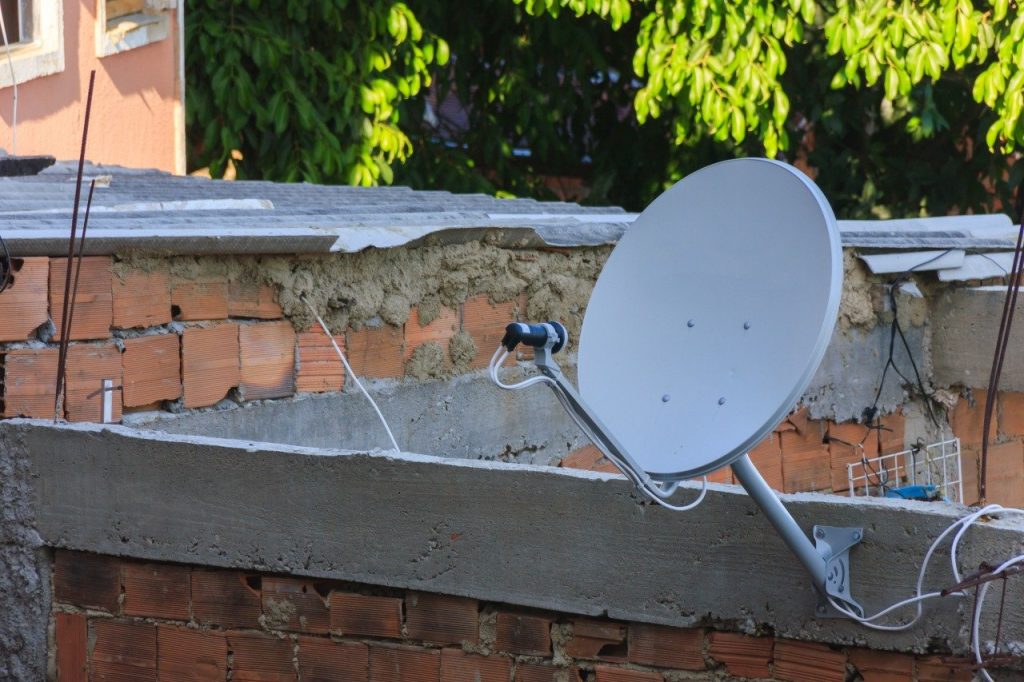
When passing through this neighborhood, it’s easy to notice the appearance of the homes built from sheet metal and plywood. But in addition to these distinctive, low-cost structures, it’s striking that several of these homes have satellite dishes installed by telecommunications companies. Yes, you read that right. Access to cable TV and the internet is not a problem in one of Asunción’s poorest neighborhoods.[1].
Let's see... How can this phenomenon be explained?
If the residents of this neighborhood can afford the “luxury” of cable and internet access, why don’t they live in better conditions? Is access to these services really a higher priority than the need for a safe and decent home?
The answer to this question is a resounding no.
The perceived disconnect regarding priorities in this neighborhood has deep institutional roots that account for a large part of the problems facing our country and that keep it mired in underdevelopment: access to the economic benefits of capital.
The following expression—eloquently—published by the illustrious Augusto Roa Bastos in 1977 applies to this problem: “Paraguay, an island surrounded by land.”[2].
While Roa Bastos denounced our country’s sociocultural ills and geographical limitations, this quote leads us to consider the situation that troubled the famous writer as well as the land itself (or rather, land ownership) and its many benefits. Both situations are related, as we shall see. In a legal and economic context, then, land is a valuable resource for escaping poverty and our sociocultural isolation. But only if it is properly “capitalized.” Otherwise, it ends up being dead capital.
“The Mystery of Capital”
The problem of dead capital was addressed at length and with great insight by Hernán de Soto, a Peruvian economist and author of *The Mystery of Capital*, in which he explains that, in reality, one of the most serious problems of underdevelopment in Latin America in general—and Paraguay in particular—is not the absence of capital (land and assets), but rather the legal system upon which that capital rests: property rights.
De Soto explains that property is a system of representation of the rights, obligations, and benefits associated with the possession of assets. And for this system of representation to be effective, it must necessarily be accompanied by a framework of well-defined rights through a registration system that allows third parties—and the market—to have a clear understanding of who owns what. Without clear rules and the necessary formalities, land and assets are dead capital.
But what does “dead capital” mean? After all, owning land and assets yields benefits such as crops, housing, and, in the case of “La Cacharita,” even internet access. The problem, according to de Soto’s view, is that the true The value of capital lies not in what it is, but in what it could be: access to credit, public services, state legal protection, etc. This is the The Mystery of Capital. The system for managing assets, which allows them to lead a parallel life; it provides the ideal platform for increasing productivity and fostering development.
Let’s look at a simple example. A farmer, operating outside the formal economy, owns a plot of land that he uses for his family’s home, as well as for subsistence farming: food and the potential to earn income by selling his produce. Now, if the farmer were interested in increasing his productivity and improving his livelihood, he would need access to credit to obtain more resources. This option, however, is unavailable to him, since he does not have a title to the property that he could use as collateral to secure a loan.
On a larger scale, the same is true of window washers, street vendors (have you ever wondered how much a street vendor earns per month?), and countless informal workers who lack the opportunity to “capitalize” on their income within the formal economy, resulting in a loss of economic capacity and development, both individual and collective. Economic actors with resources but operating outside the legal system have capital with limited potential, which prevents them from increasing productivity and generating wealth. A system without well-defined property rights is one that distorts the potential of capital, to the point of rendering it useless.
The case of “La Cacharita” is a clear example of people with resources—but who operate outside the legal system—who have the financial means to pay for a monthly internet service, yet lack the legal standing to formalize ownership of their home, access credit, social security, public services (with their flaws and merits), and many other benefits that pass them by.
Just to get a clearer picture of how serious this situation is in the country, Pro Desarrollo Paraguay, a nonprofit organization, conducts an annual study on the country’s informal economy, quantifying it as a percentage of the national GDP. In its latest report, the organization found that the informal or underground economy amounts to the astronomical figure of US$$. 16,647 million, which is equivalent to 42.7 % of GDP.[3]. Nearly half of what we produce in the formal sector is buried in the informal sector. What would happen if we could tap into this potential?
Faced with this tragic situation, what is the solution?
With the exception of criminals, smugglers, and drug traffickers, therefore, informal workers are excluded from the legal system not because of a lack of interest, but because of a problem of costs. Being a formal worker is extremely costly and bureaucratic. At the end of the day, everyone wants access to health care, education, and financing. The solution to this problem is to reduce the “transaction costs” of the existing complex bureaucracy. For this to happen—for the informal sector to come under the legal protection of the state—paradoxically, we need at least Status.
In order for those in the informal sector to gain access to the formal system, we need to reduce the costs of formalization, registration fees, and bureaucratic red tape. In short, we need to downsize the state apparatus and replace it with an efficient structure, eliminating unnecessary bureaucracy. One alternative currently available—though not the only one—is the incorporation of technology into public administration to simplify processes and eliminate excessive red tape. This will result in reduced processing times and costs, not to mention the benefits in terms of transparency. Only in this way will street vendors be able to issue invoices, MSME entrepreneurs be able to enroll their employees in the IPS, and farmers have access to credit to increase their production.
Only in this way can Paraguay cease to be an island surrounded by land—disconnected from the region and the world—and finally become an attractive island surrounded by prosperity.
[1] You can see some of the landscapes described on these websites: 1) http://politicalparaguay.com/grupo-frances-cambia-sonido-la-pobreza-barrio-asuncion/; 2) https://www.efe.com/efe/america/sociedad/suben-a-12-800-las-familias-afectadas-por-inundaciones-que-llegan-asuncion/20000013-3942218
[2] Roa Bastos, Augusto. “Paraguay, an Island Surrounded by Land.”. The UNESCO Courier, 1977. Access the article at the following link: http://www.lacult.unesco.org/docc/oralidad_06_07_56-59-paraguay.pdf
[3] For more information, visit the website: https://www.ultimahora.com/la-economia-negro-aumento-usd-16647-millones-el-2019-n2913630.html
 Español
  English
  Português do Brasil